TL;DR
- ChatGPT’s outbound traffic grew 206% in just 18 months — AI search is no longer a trend, it’s where buying decisions start.
- AI engines read Reddit threads, review sites, and media mentions to describe your brand — your own website is often the last thing they consult.
- A single negative off-site review or Reddit thread can permanently shape how AI answers questions about you.
- One company achieved a 4,540% increase in AI Overview citations — without ad spend, purely through content authority and structure.
- GEO (Generative Engine Optimization) is now running parallel to SEO — and brands that ignore it are becoming invisible in AI-generated answers.
Here’s something that should keep you up at night: right now, potential customers are asking ChatGPT, Perplexity, or Google’s AI Overviews about the problem your product solves. The AI is answering them. And you have almost no control over what it says.
You spent years crafting your website copy, your messaging, your brand voice. But AI search engines? They’re not starting with your homepage. They’re starting with Reddit. With G2 reviews. With that TechCrunch mention from 2022. With the frustrated customer who left a 2-star review that nobody responded to.
This is the shift most marketing leaders are still missing — and the data is now too loud to ignore.
The Numbers That Should Change Your Strategy Today
Semrush just analyzed over 1 billion lines of US clickstream data covering 18 months of AI search behavior. The headline number: outbound traffic from ChatGPT grew 206%. Let that sink in. This isn’t a niche tool anymore — it’s a primary discovery channel.
More than 30% of all ChatGPT outbound traffic goes to just 10 domains. And here’s the wild part: over 20% goes to Google. People are using ChatGPT to start their research, then heading to Google to verify or explore further. The funnel didn’t disappear — it just got a new first step.
But the critical insight isn’t the traffic volume. It’s how AI decides what to say about you before it sends that traffic anywhere.
WHERE AI LEARNS ABOUT YOUR BRAND
Off-Site Sources
What AI prioritizes
HIGH TRUST
Reddit threads & forums
G2, Capterra, Trustpilot
Media coverage & press
Industry analyst mentions
Your Own Site
What you control
MEDIUM
Homepage & product pages
Blog & documentation
Case studies & FAQs
Structured content (schema)
AI forms its opinion about your brand before it ever reads your about page.
What This Means for Your Business
- Your brand reputation in AI search is largely determined by content you didn’t write — reviews, forums, and third-party articles.
- A competitor’s satisfied customers on Reddit can outrank your polished homepage in AI’s understanding of your category.
- Action: Audit what AI says about you today. Search for your brand on ChatGPT, Perplexity, and Google AI Overviews. The gap between that and your ideal positioning is your GEO gap.
AI Doesn’t Just Rank You — It Defines You
Here’s where it gets more nuanced — and more dangerous. Semrush makes this point sharp: „AI doesn’t just read your site. It reads everyone else’s.“
When a potential customer asks „What’s the best email marketing tool for a growing SaaS company?“ — the AI isn’t checking your features page. It’s synthesizing hundreds of sources to construct an answer. Your position in that answer depends entirely on how the broader digital conversation describes you.
The Semrush team puts it bluntly: positions and mentions don’t matter without context. You might show up in an AI answer, but in the wrong context — as a budget option when you want to be premium, or as a solution for SMBs when you’re targeting enterprise. Or you might not show up at all.
And here’s the brutal part: a single prominent negative review, a viral Reddit complaint, or a critical comparison article can permanently anchor how AI describes your brand — even after the issue is resolved on your end.
„AI citations trust off-site sources. Reddit threads, reviews, and media mentions now matter more than your own content. Even a single negative review can influence what AI says about your brand.“ — Semrush Research, April 2026
The GEO Opportunity: From Invisible to Authoritative
This sounds terrifying — and honestly, for brands that aren’t paying attention, it should be. But for those who move now, the upside is enormous.
Neil Patel’s agency recently published a case study showing what’s possible. By focusing on three things — authoritative intent-driven content, strong E-E-A-T signals, and content structured for AI extraction — they achieved a 4,540% increase in Google AI Overview citations. Not through ad spend. Not through backlink hacking. Through becoming genuinely citable.
Robin Heintze from morefire frames this well: the goal isn’t to „do GEO“ as a separate project. It’s to make your content worthy of being cited by both humans and machines. The order matters: first, write for humans. Then, structure for machines. When you reverse that order, you end up with content that’s neither engaging nor trustworthy.
GEO strategy for 2026 breaks down into four pillars:
- Content authority — create comprehensive, specific, well-cited content that earns mentions from third-party sources naturally
- Off-site reputation management — actively monitor and respond to reviews, encourage satisfied customers to share experiences on forums like Reddit and G2
- Structured content — use FAQ schemas, clear H2/H3 hierarchies, and explicit statement-style language that AI can extract cleanly
- Brand signal amplification — get your brand mentioned in relevant publications, podcasts, and industry roundups. LLMs like ChatGPT weight strong brands higher in their answers
What This Means for Your Marketing Budget
- Brand PR and thought leadership content that generates third-party mentions now has direct, measurable ROI through AI citation visibility.
- Customer success and review generation programs are no longer just CX initiatives — they’re AI SEO infrastructure.
- Keyword research is evolving: people now ask AI in full sentences. Target question-based, intent-specific phrases — not just 2-3 word terms. Research shows queries now average 7–11 words.
What About Paid Search? It’s Shifting Too.
If you’re running Google Ads or investing in paid search, you’re feeling this already: CPCs are rising, CTR is dropping, and performance is harder to scale. Your campaigns didn’t get worse — the environment changed.
AI Overviews are eating the top of the search results page. Users ask, get an AI-generated answer, and often don’t click anything. For advertisers, this means you’re competing not just for a position — you’re competing to be included in the AI’s answer itself.
ChatGPT is also building out a paid advertising model. They started with CPM (cost per thousand impressions), and are now shifting to CPC — more familiar territory for performance marketers. The catch? The infrastructure is still immature. Advertisers currently get only basic data: impressions, clicks, spend. No clean targeting, no conversion optimization, no detailed audience insights. It’s promising, but it’s not Google Ads 2.0 yet.
The implication: don’t abandon paid search. But do understand that organic AI visibility and paid search are increasingly connected. If AI is citing your content organically in Overviews, your paid ads perform better because your brand is already part of the answer.
What CMOs Should Do in the Next 30 Days
- Audit your AI presence: Search your brand and key category questions on ChatGPT, Perplexity, and Google AI Overviews. Screenshot the answers. That’s your baseline.
- Map your off-site reputation: Where are people talking about you? Reddit, G2, Trustpilot, industry forums? Are those conversations accurate and positive?
- Prioritize structured content: Reformat your highest-traffic pages to use explicit Q&A sections, clear headers, and direct answer statements — not just flowing prose.
- Measure AI share of voice: Tools like ucited.ai now track your brand’s mentions in ChatGPT, Gemini, and Copilot answers compared to competitors. Add this to your monthly KPI dashboard.
The Uncomfortable Truth About AI and Brand Data
One more finding worth highlighting — from a Gartner study referenced by morefire: companies that are successfully using AI in marketing are investing 4x more in data infrastructure than those that aren’t. And only 39% of companies currently believe their AI investments will positively impact business outcomes.
That gap tells the real story: most companies are investing in AI tools without investing in the data quality, governance, and processes that make those tools actually work. This applies directly to GEO — you can’t optimize your AI visibility if you don’t know where you currently stand.
The brands winning in AI search right now aren’t the ones with the biggest budgets. They’re the ones with the clearest brand positioning, the most consistent communication, and the most organized content strategy. AI amplifies what already exists. Strong brands get preferred treatment in LLM answers — because the data ecosystem around them is richer and more consistent.
Want to Know What AI Is Saying About Your Brand?
I work with Marketing Leaders and CMOs on exactly these questions — AI visibility strategy, GEO content audits, and building the infrastructure to measure and grow your presence in AI search. Let’s talk.
Frequently Asked Questions
What is GEO and how is it different from SEO?
GEO (Generative Engine Optimization) is the practice of optimizing your content to be cited and referenced by AI search engines like ChatGPT, Perplexity, and Google’s AI Overviews. While traditional SEO focuses on ranking your pages in search results, GEO focuses on becoming the source that AI engines trust and cite when generating answers. The two are complementary — strong SEO foundation helps GEO, but GEO requires additional strategies like structured Q&A content, off-site reputation management, and explicit, extractable language.
Why does AI search care about Reddit and reviews more than my website?
AI language models are trained on massive amounts of internet data — and third-party sources like Reddit, G2, and media coverage are considered more objective than branded content. Your website is your own marketing; Reddit is what actual users say about you. AI models weight the latter as more trustworthy signal, which is why managing your off-site presence is now a core marketing responsibility.
How can I track what AI search engines say about my brand?
Start manually by searching your brand name and relevant category questions on ChatGPT, Perplexity, and Google AI Overviews. For ongoing monitoring, tools like ucited.ai track your AI share of voice — including which prompts surface your brand, how you’re described, and how you compare to competitors across multiple AI engines.
Is ChatGPT advertising worth testing right now?
It’s worth watching, but not the primary channel to invest in today. ChatGPT’s ad platform is shifting to CPC-based billing, which is more familiar for performance marketers, but the targeting, tracking, and measurement infrastructure is still immature compared to Google or Meta. Unless you have a very specific reason to be an early mover, wait 6–12 months for the platform to mature before significant budget allocation.
What kind of content performs best in AI search results?
Content that is specific, well-structured, and makes direct, unambiguous statements. AI engines prefer content organized with clear headers, FAQ sections, explicit definitions, and concrete data points. Avoid vague, generic statements. Instead write specific, measurable claims: „Our platform reduces email setup time by 60% for teams under 50 people.“ Specificity equals citability in AI search.
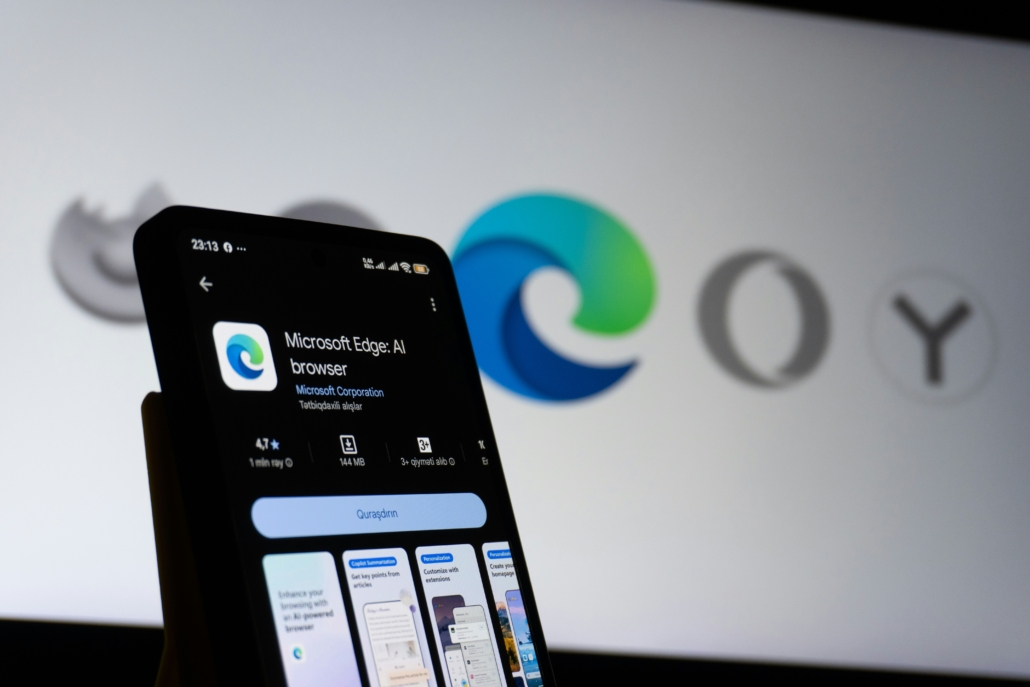
Foto von Zulfugar Karimov auf Unsplash





Dein Kommentar
An Diskussion beteiligen?Hinterlasse uns Deinen Kommentar!